Common appearance and internal problems of refractory bricks
2024-11-09
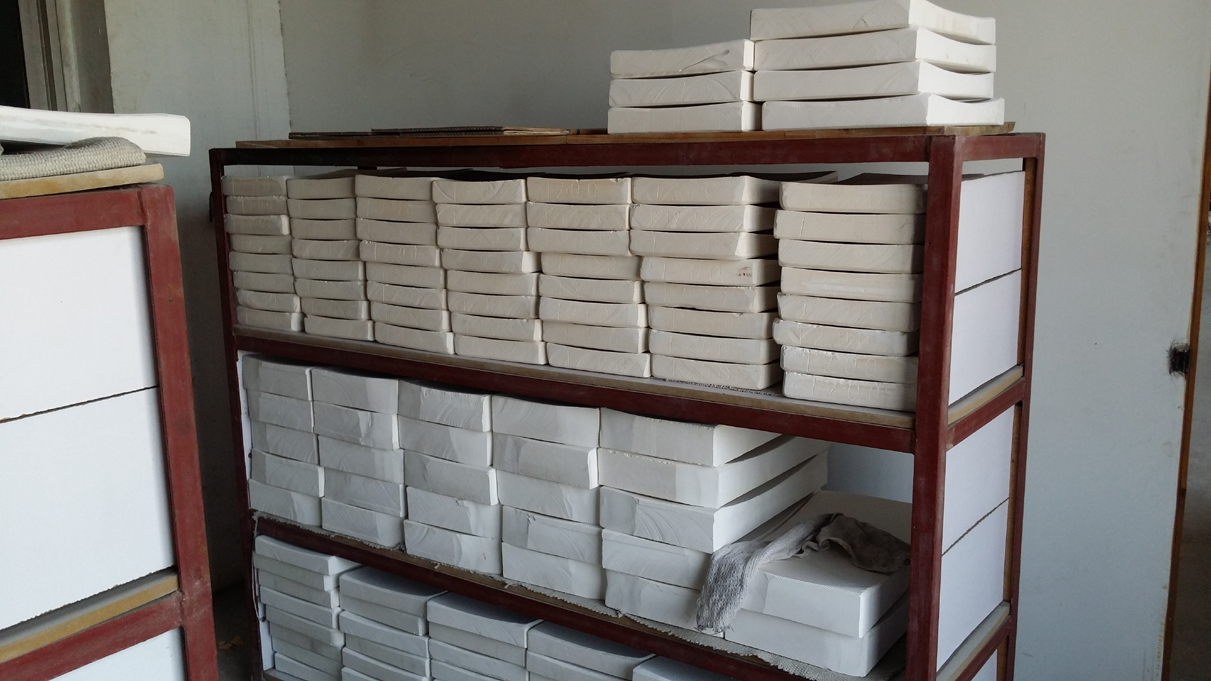
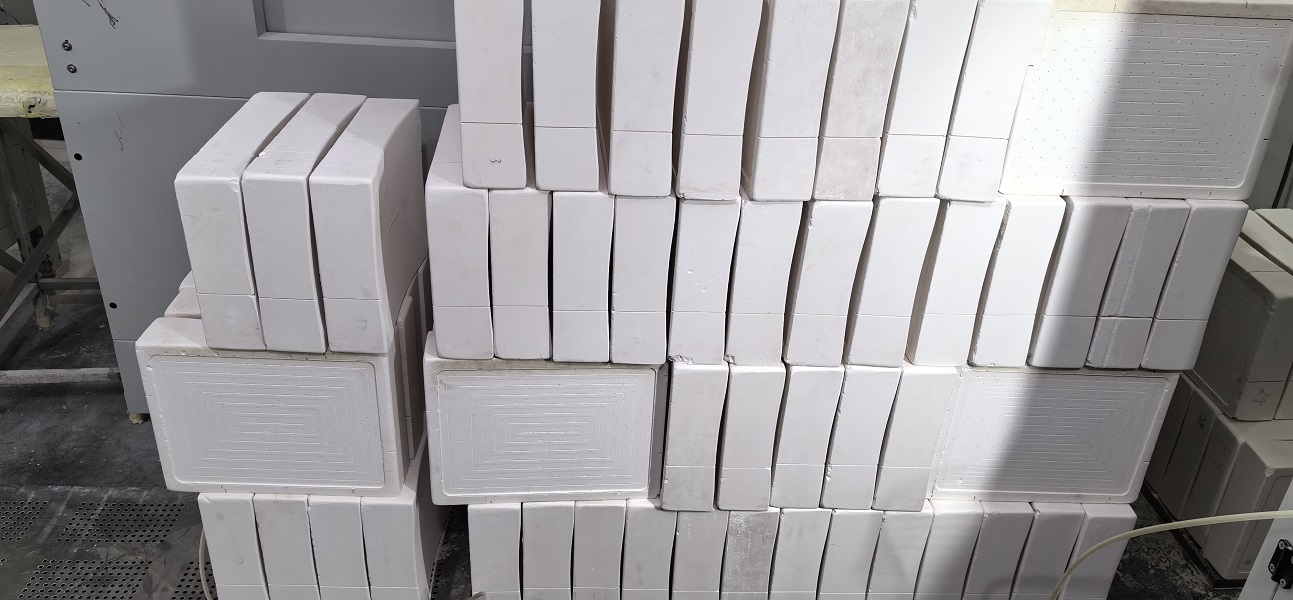
After firing, refractory brick products need to be sorted and tested for physical and chemical properties to identify whether the products meet the expected shape, size, composition and performance requirements.
Appearance sorting is to check whether refractory brick products have deformation, cracking, defects, fire moles, melting holes, raw or over-burning, tolerances, etc. Chemical composition and microstructure are mainly determined by chemical analysis, X-ray diffraction analysis, fluorescent X-ray analysis, as well as petrographic and metallographic analysis. Some physical properties, including bulk density, refractoriness, load softening temperature, porosity, thermal conductivity, resistivity, dielectric constant, linear thermal expansion, thermal shock resistance, water absorption, dielectric loss, dielectric breakdown, mechanical strength, hardness, elastic modulus, etc., have special testing equipment and standard testing methods. As for the chemical stability of products in various chemical environments such as acid, alkali, salt, metal, glass and gas, they are often determined and judged by special means or simulation test methods according to the different uses of different refractory brick products. Trace back non-compliant items from the manufacturing process.
Quality problems of refractory brick appearance:
1) Raw burning or over-burning, the kiln loading method, firing temperature and insulation time should be traced;
2) Looseness, the raw material sintering quality, the quality of the formed body, the clay particle grading, the firing system, etc. should be traced;
3) Large dimensional tolerance, the raw material performance, clay particle size distribution, model design scale ratio, model size, kiln loading method and firing system, etc. should be traced;
4) Deformation, the clay, kiln loading method and firing system, etc. should be traced;
5) Cracking , the quality of raw material processing, ingredient ratio and clay moisture, molding quality, drying quality, firing system, etc. should be traced;
6) Layer cracking, the clay particle size distribution and clay moisture, molding quality should be traced;
7) Missing corners and edges, the quality of the dried blank, the quality of the model, and the quality of handling should be traced;
8) Melt holes, the low-melting impurities in the raw materials, the quality of the raw material purification treatment, and the impurities mixed in the production process should be traced;
9) Fire moles, the kiln loading method and the thermal working conditions of the firing process should be traced, etc.
Appearance sorting is to check whether refractory brick products have deformation, cracking, defects, fire moles, melting holes, raw or over-burning, tolerances, etc. Chemical composition and microstructure are mainly determined by chemical analysis, X-ray diffraction analysis, fluorescent X-ray analysis, as well as petrographic and metallographic analysis. Some physical properties, including bulk density, refractoriness, load softening temperature, porosity, thermal conductivity, resistivity, dielectric constant, linear thermal expansion, thermal shock resistance, water absorption, dielectric loss, dielectric breakdown, mechanical strength, hardness, elastic modulus, etc., have special testing equipment and standard testing methods. As for the chemical stability of products in various chemical environments such as acid, alkali, salt, metal, glass and gas, they are often determined and judged by special means or simulation test methods according to the different uses of different refractory brick products. Trace back non-compliant items from the manufacturing process.
Quality problems of refractory brick appearance:
1) Raw burning or over-burning, the kiln loading method, firing temperature and insulation time should be traced;
2) Looseness, the raw material sintering quality, the quality of the formed body, the clay particle grading, the firing system, etc. should be traced;
3) Large dimensional tolerance, the raw material performance, clay particle size distribution, model design scale ratio, model size, kiln loading method and firing system, etc. should be traced;
4) Deformation, the clay, kiln loading method and firing system, etc. should be traced;
5) Cracking , the quality of raw material processing, ingredient ratio and clay moisture, molding quality, drying quality, firing system, etc. should be traced;
6) Layer cracking, the clay particle size distribution and clay moisture, molding quality should be traced;
7) Missing corners and edges, the quality of the dried blank, the quality of the model, and the quality of handling should be traced;
8) Melt holes, the low-melting impurities in the raw materials, the quality of the raw material purification treatment, and the impurities mixed in the production process should be traced;
9) Fire moles, the kiln loading method and the thermal working conditions of the firing process should be traced, etc.
Problems with the internal indicators of refractory bricks:
1) The chemical composition (main component, secondary component, impurities), mineral composition (type, quantity, crystal size distribution, pore size distribution, liquid phase quantity distribution, etc.) do not meet the expected requirements, and the raw material composition, whether the proportion of ingredients is appropriate, and whether the firing system is reasonable should be traced;
2) The volume density and porosity are not up to standard, and the quality of the clay, the quality of the blank, the firing system, etc. should be traced;
3) For air permeability, the proportion of ingredients, the quality of the blank, the firing system, etc. should be traced;
4) Strength, such as compressive strength, flexural strength, and impact strength, should be traced back to the quality of the clay and the blank. , firing system, etc.;
5) Resistance and insulation strength should be traced back to the raw material properties, ingredient ratio, firing system, etc.;
6) Refractoriness should be traced back to the raw material properties;
7) Thermal expansion and re-firing line changes should be traced back to the raw material properties, ingredient ratio, clay properties, green body properties, firing system, etc.;
8) Thermal conductivity should be traced back to the raw material properties, green body properties, firing system;
9) Thermal shock resistance should be traced back to the raw material properties, ingredient ratio, clay properties, firing system;
10) High temperature load softening should be traced back to the raw material properties, clay composition and particle size distribution, molding quality, firing system, etc.
The Second Pair of Eyes for Safe Driving – The Importance of Car Rearview Mirrors
Key Factors Influencing the Refractoriness of Firebricks
Related Article