
Unlocking the Secrets of Automotive Rearview Mirrors
2024-01-26
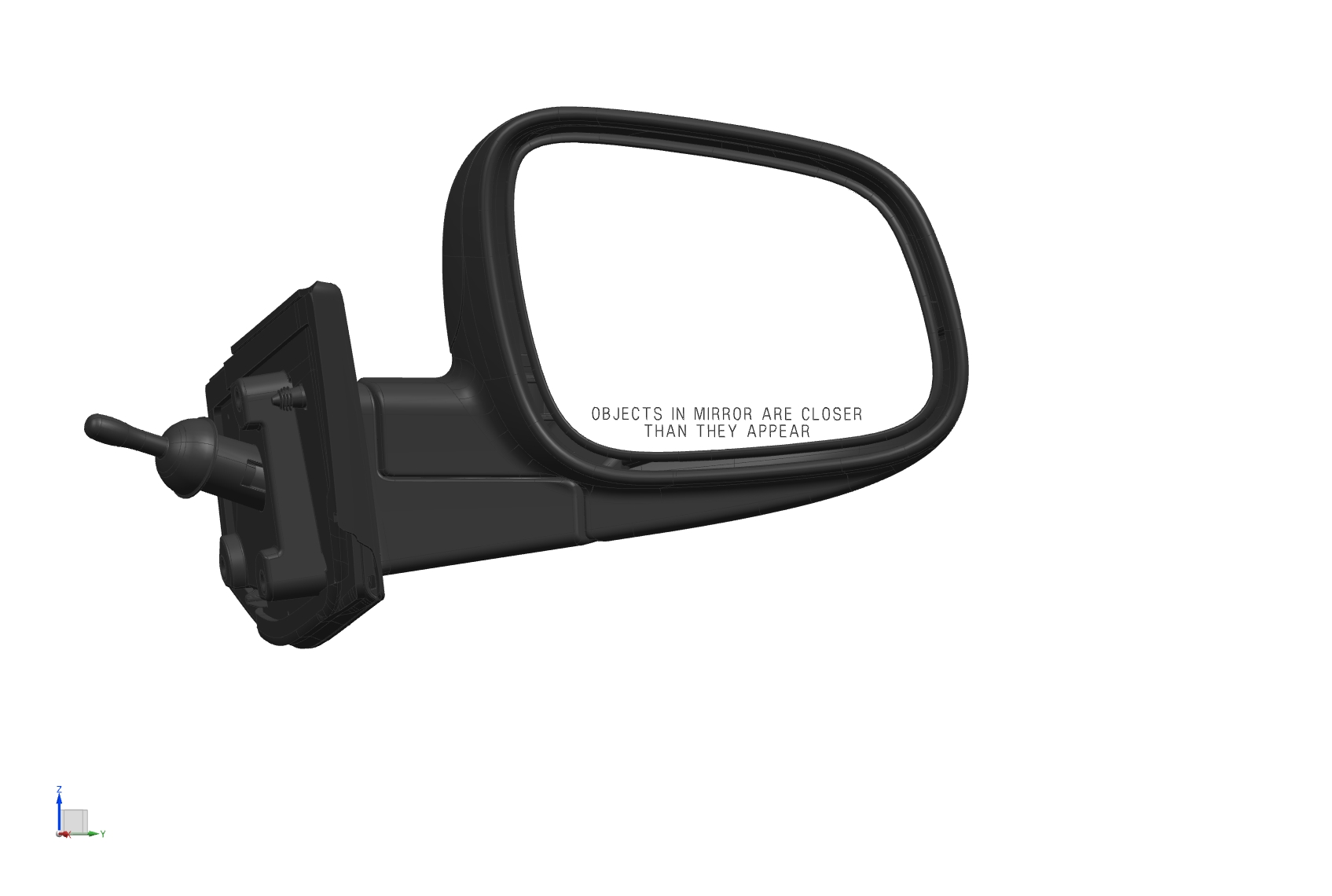
In the intricate ecosystem of automotive engineering, rearview mirrors stand as unsung heroes, silently aiding drivers in navigating the bustling thoroughfares of modern life. While often taken for granted, these unassuming reflective surfaces play a pivotal role in ensuring road safety, employing a blend of physics and ingenuity to provide motorists with essential visual information. Let's delve into the inner workings of automotive rearview mirrors, unraveling the mysteries behind their functionality.
Reflective Magic:
At its core, the principle governing rearview mirrors is the reflection of light. Light, upon striking a surface, undergoes reflection, bouncing off at an angle equal to the angle at which it hit the surface. Automotive rearview mirrors leverage this fundamental phenomenon to allow drivers to see objects behind them without physically turning around.
Types of Rearview Mirrors:
There are primarily two types of rearview mirrors employed in automobiles: flat mirrors and convex mirrors. Flat mirrors offer a true reflection of objects but provide a limited field of view. On the other hand, convex mirrors, with their outwardly curved surface, widen the scope of vision, albeit with some distortion.
The Mechanism:
Behind the seemingly simple task of reflection lies a sophisticated mechanism. Rearview mirrors are strategically positioned within the vehicle to minimize blind spots and optimize visibility. They are typically mounted inside the vehicle, either on the windshield or the interior roof.
Behind the seemingly simple task of reflection lies a sophisticated mechanism. Rearview mirrors are strategically positioned within the vehicle to minimize blind spots and optimize visibility. They are typically mounted inside the vehicle, either on the windshield or the interior roof.
Adjustment Mechanisms:
Modern automobiles are equipped with adjustable rearview mirrors, allowing drivers to customize their field of vision according to their preferences. Mechanical controls or electronic systems facilitate this adjustment, enabling drivers to align the mirrors to suit their height and seating position.
Dimming Feature:
Another innovative feature found in many rearview mirrors is auto-dimming. This technology utilizes sensors to detect headlights from vehicles trailing behind and automatically adjusts the mirror's tint to reduce glare, enhancing nighttime visibility and minimizing driver distraction.
Integration with Advanced Systems:
With the advent of advanced driver-assistance systems (ADAS), rearview mirrors have evolved to incorporate additional functionalities. Some mirrors now integrate cameras and sensors, providing drivers with augmented views of their surroundings and enhancing overall safety.
Future Innovations:
Looking ahead, the future of automotive rearview mirrors appears promising. Innovations such as augmented reality displays and smart mirrors, capable of integrating with navigation systems and AI-driven algorithms, hold the potential to revolutionize the driving experience further.
Conclusion:
In conclusion, while often overlooked, automotive rearview mirrors serve as indispensable aids, offering drivers a glimpse into the world behind them. Through the mastery of light and reflection, coupled with ingenious design and technological advancements, these unassuming devices continue to play a vital role in ensuring road safety and enhancing the driving experience. So, the next time you glance into your rearview mirror, take a moment to appreciate the intricate workings behind this seemingly simple yet profoundly important automotive component.
Clear Vision and Safety Ensured: Automotive Rearview Mirror Heating Plate
Enhance Your Driving Experience with Convex Mirrors
Related Article